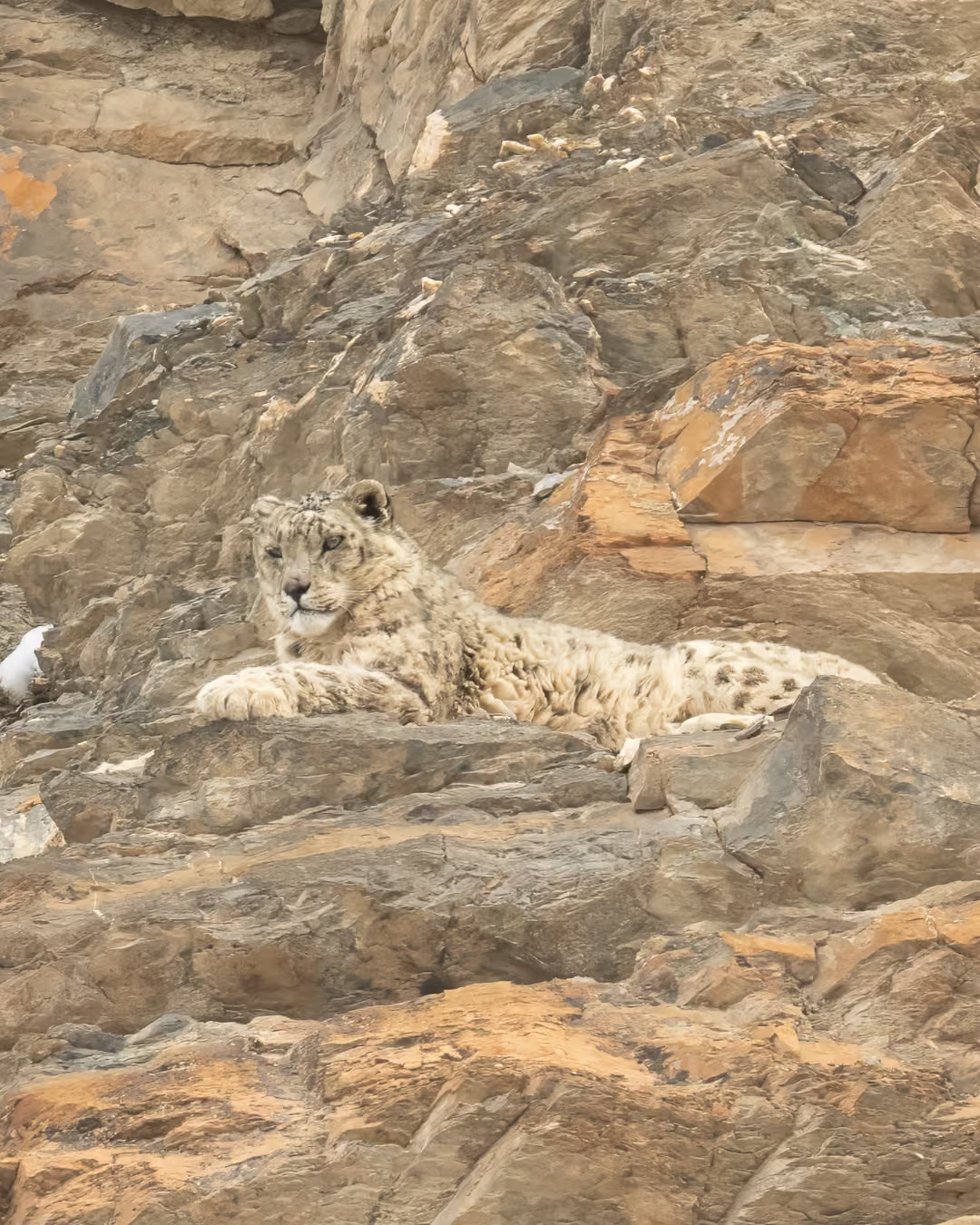
The Ghost of the Himalaya
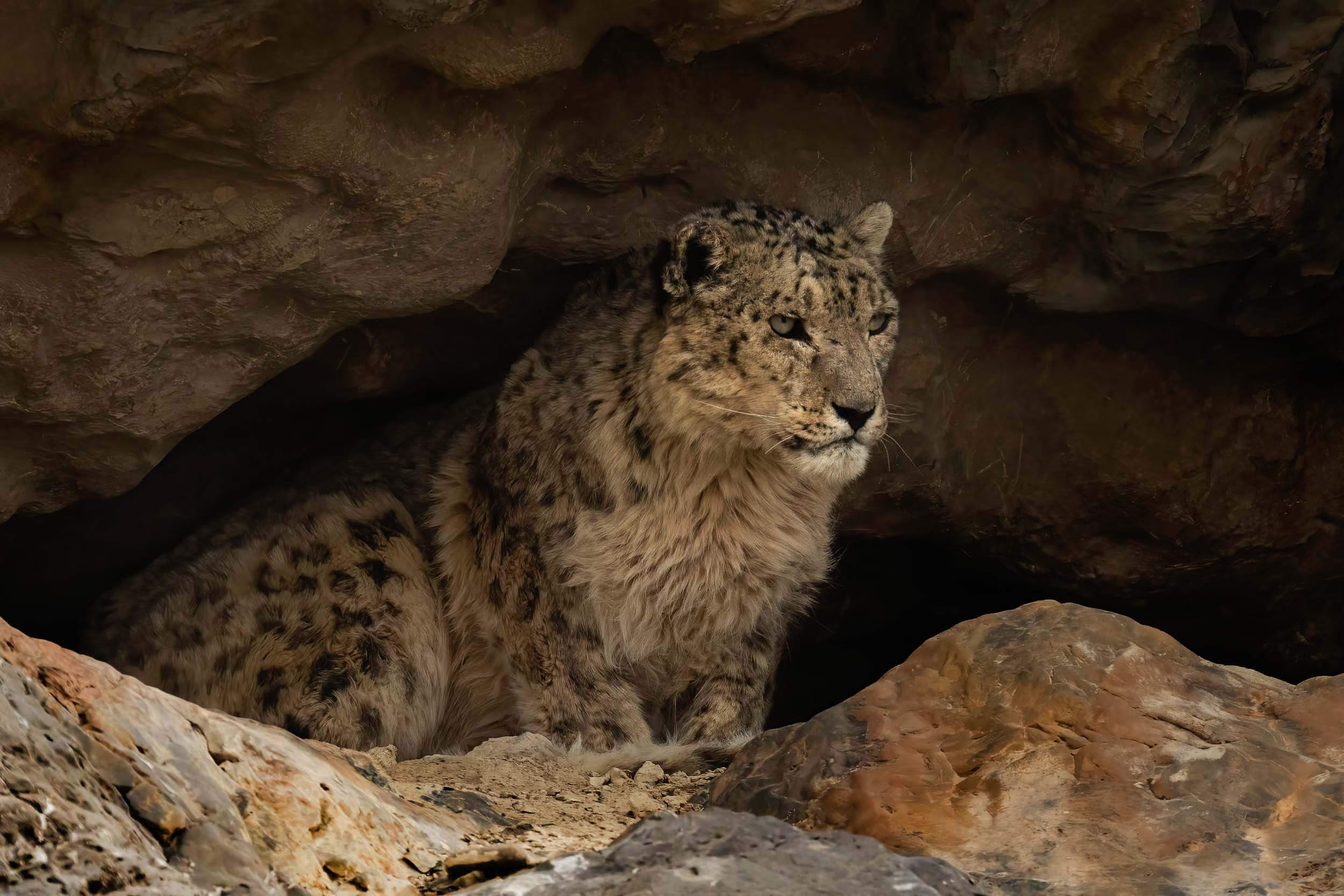
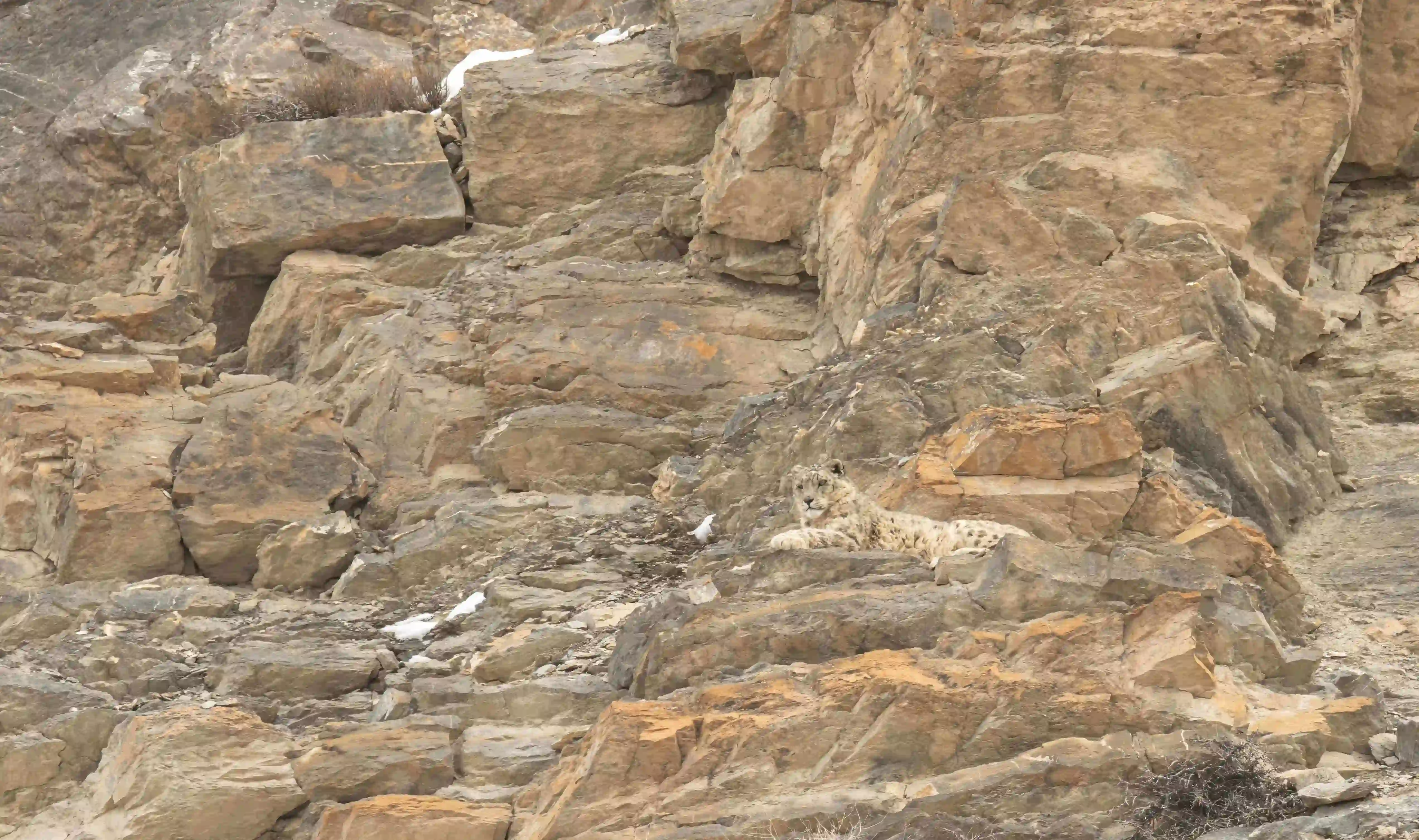
Most wildlife happens close. You learn to read the grass, the light, the silence before an animal appears. Ladakh is different. Here the snow leopard lives at distance, along ridgelines that take minutes to find through a scope. My guide came with news: a female near the valleys around Mangyu, three cubs. She was already there when we arrived. It took me a long time to see her. Not to find her — the guides had her at once — but to make the shape mean something. Rock, rock, snow, and then, slowly, an animal. Four of them. Impossibly far. I had a 200-600 with a converter and it was of no use whatsoever, and I did not mind at all.
We stayed most of the day. At some point lunch appeared: rice and beans, served outside, seven degrees above zero, eaten standing while a snow leopard and three cubs moved along a ridge above us. I was still getting used to the altitude, and every breath reminded me of it. Nobody was in a hurry to leave. You do not walk away from something you have waited this long to be able to see.
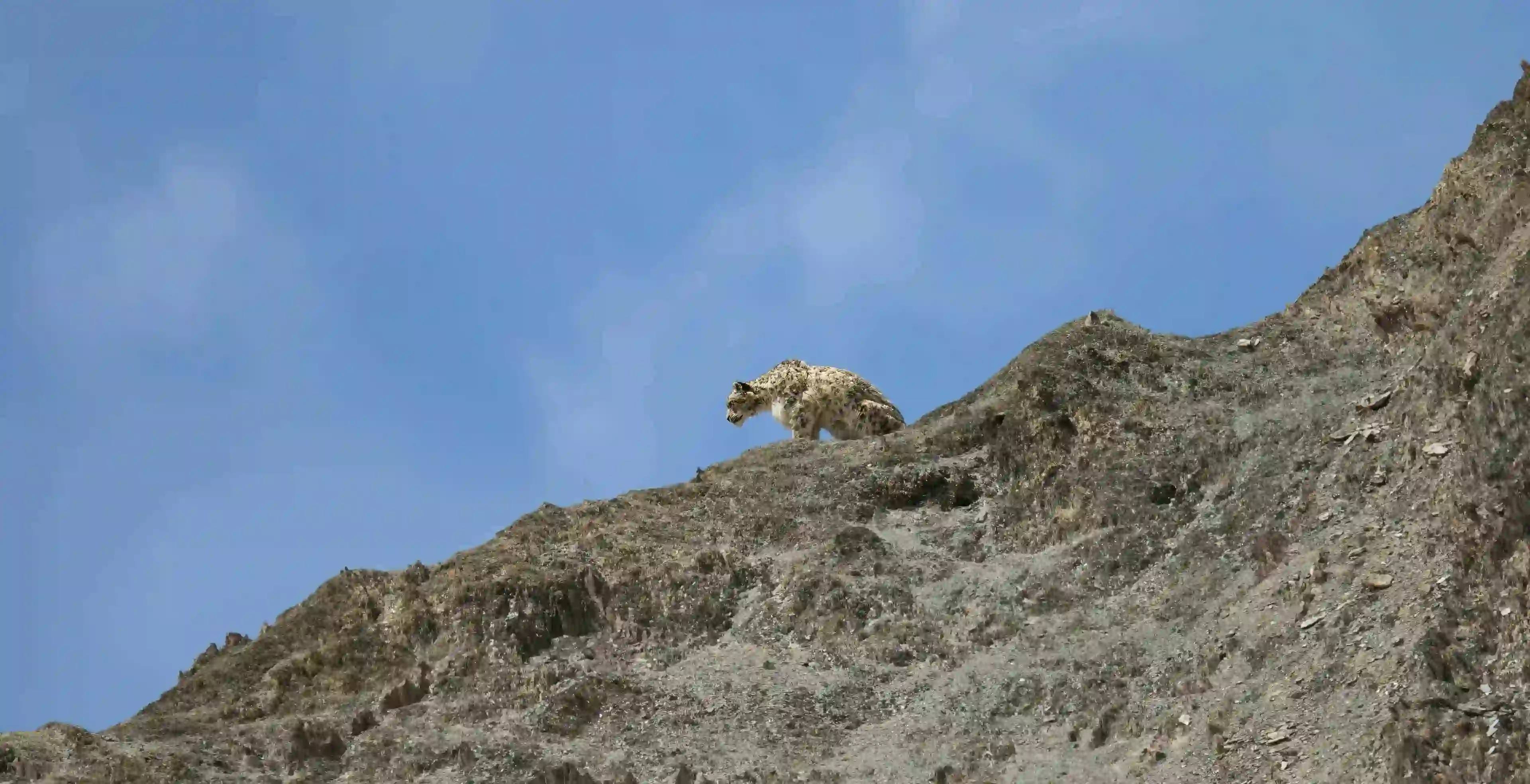
The one I will keep came later. The driver stopped, stepped out with his scope, and ran back to knock on the window. There is a snow leopard. A male, alone, walking slowly across the mountainside. He crossed the slope the way something crosses a room it has lived in all its life, and then he went behind a rock. Every spotter in the valley was watching that rock. We waited. Forty-five minutes later somebody said what we had all begun to think, and we understood he had been gone for a long time. We never found him again.
The first one took me fifteen minutes to see. The second one I never saw leave.
Gallery


Photograph the snowleopard yourself
Join our small-group expedition to Ladakh and look for the world's most elusive cat — where this story was made.